De Gietkamer · Soest
Bespoke sand casting for parts and designs
We take an existing component, physical pattern or 3D design through pattern preparation, a suitable sand mould, casting and finishing.
Ask for advice →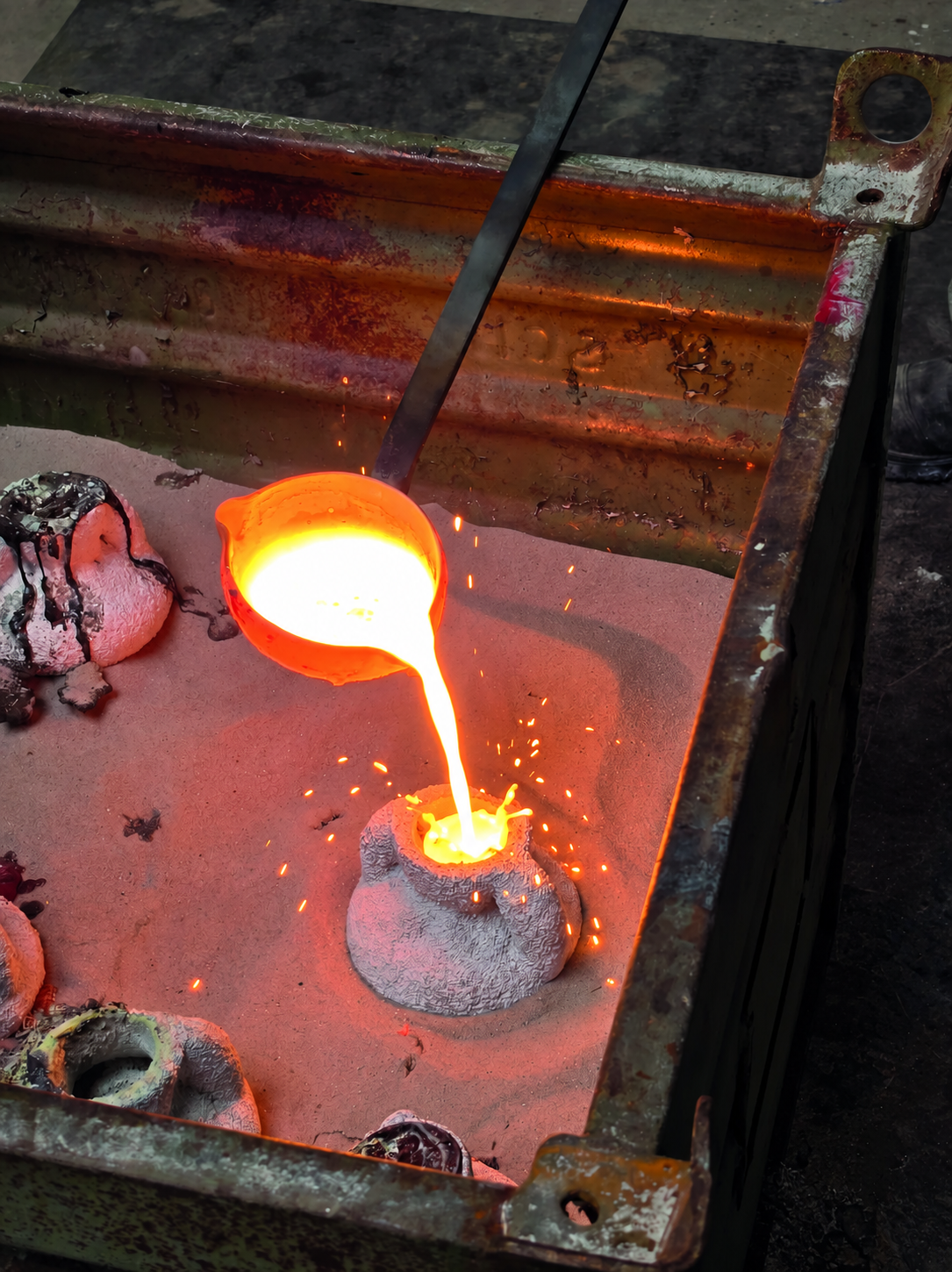
When sand casting makes sense
A positive pattern is impressed into moulding sand. Removing it leaves the cavity into which molten metal is poured. This robust, repeatable method can suit larger forms, technical parts, architectural details, fittings, prototypes and small or medium batches. Extremely fine detail or complex hollow shapes may call for a plaster or ceramic shell mould instead.
Understand the application
Tell us how the component will be used, the dimensions and interfaces that matter and the quantity required. For functional parts, fit and fixing are as important as appearance. Replacement components must also connect correctly to the existing object.
Prepare a usable pattern
A physical component, model, drawing or digital file can be the starting point. We check wear and geometry and, where appropriate, use 3D scanning, modelling or printing to prepare a production pattern. Digital preparation complements traditional mould making.
Mould, metal and finish
Parting lines, draft and the metal’s route into the cavity are considered together. Aluminium, brass and bronze are among the available materials, subject to the design and application. After casting, we remove gates, inspect the part and carry out the agreed machining or surface finishing.
Files and first assessment
Preview STEP, STP, STL, OBJ, 3MF and GLB in the 3D studio. DWG, DXF, PDF, photographs and sketches can also accompany an enquiry. Include dimensions, quantity, intended use, preferred metal and finish. You do not need to choose the casting method yourself.
Frequently asked questions
Can I order a single sand-cast part?
A single part may be possible. Sand casting can also suit repeat orders and small or medium batches; we assess the appropriate method for each design.
Can an existing part be used as a pattern?
Possibly. We assess its condition, dimensions and shape before deciding whether direct moulding, scanning or a new pattern is needed.
Is sand casting suitable for very fine details?
It can reproduce clear forms and textures, but another mould technique may be better for very fine detail or complex hollow geometry.
Related advice
Need help with your project?
Send your question, photos and dimensions. We will discuss the options and respond by email.
Ask for advice